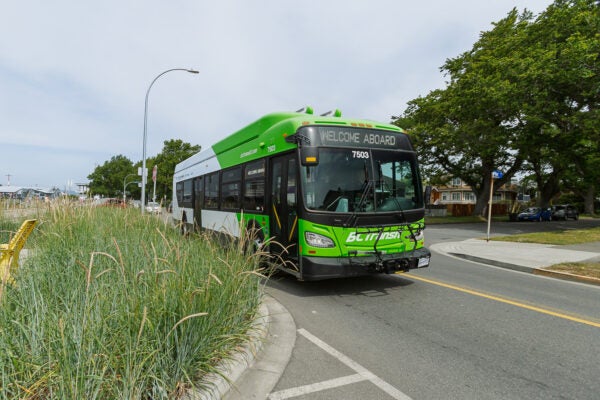
Choosing transit is one of the easiest ways to reduce your impact on the environment. When you ride the bus, you help lower the number of single-occupant vehicles on the road. This reduces traffic, cuts greenhouse gas emissions, and supports the Province of B.C.’s CleanBC plan.
Environmental Sustainability Plan
Our Environmental Sustainability Plan guides how we build a cleaner and more resilient transit system. It brings together partners, staff, and communities to create a future that is reliable, fair, and better for the environment.
The plan focuses on six priority areas:
- Climate mitigation
- Improving air quality
- Climate-resilient and sustainable infrastructure
- Operational resource management
- Sustainable procurement
- Environmental governance and risk management
The plan includes clear targets to help us track progress over time. It also includes feedback from riders, staff, and community partners. Together, these steps help us reduce our environmental footprint and support a more sustainable transit network.
Our Vehicles
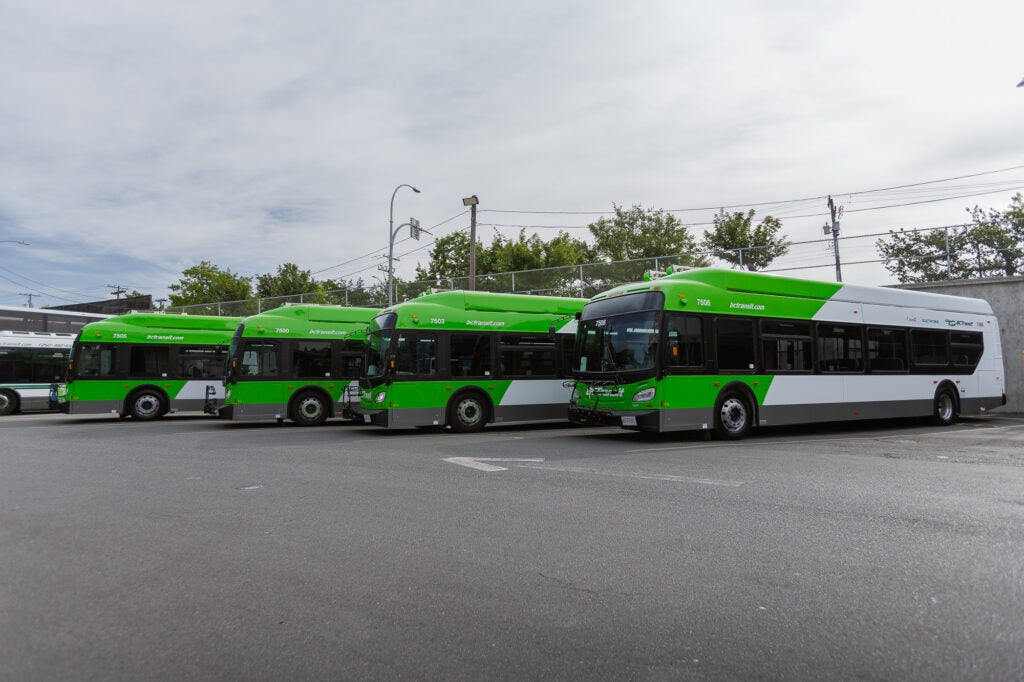
Electric bus projects
BC Transit is delivering phase one of its Electrification Program which includes purchasing and deploying 141 electric buses over the next three years across select BC Transit systems.
Low Carbon Fleet Program
In July 2019 BC Transit announced its Low Carbon Fleet Program which aligns with the Province’s CleanBC and forms a core component of our strategic vision for the future of BC Transit.
Biofuels
Some of our Compressed Natural Gas buses can run on Renewable Natural Gas, which is made from organic waste. Many of our diesel buses use Hydrogenated-Derived Renewable Diesel. Both fuels help reduce emissions and support cleaner operations.
Non-fleet vehicles
We choose electric, hybrid, or CNG vehicles for our pool cars and service trucks whenever possible. This helps lower emissions across all areas of our work.
Our facilities
New facilities
We design new operations and maintenance buildings to meet Step 3 of the B.C. Energy Step Code and to reach LEED Gold or an equivalent standard. These buildings use less energy and water, create healthier spaces, and reduce long-term operating costs.
The Victoria handyDART facility, opened in April 2025, is the first site built to this standard.
Existing facilities
We continue to upgrade our existing buildings across the province. Improvements include high-efficiency heating and cooling, water-saving bus wash systems, and energy-efficient lighting. These upgrades help lower energy use and reduce environmental impacts.
Climate resilience and adaptation
We plan for both climate mitigation and climate resilience. To understand where our systems may be at risk, we completed a Climate Risk Vulnerability Assessment for our most critical facilities. The results help us strengthen our infrastructure and prepare for the changing climate, so we can keep transit running safely and reliably.
Other initiatives
Pollution prevention
We work with our operating partners to reduce environmental risks. Each partner must have strong environmental management systems and spill response plans. We also conduct regular third-party site assessments and inspections to monitor any impacts on the lands we own or lease.
STeam (Sustainability Team)
Our Sustainability Team, or STeam, leads projects that help reduce our environmental footprint and provides opportunities for all staff members to participate in green activities. The team also supports BC Transit team members in choosing sustainable habits at work and at home.
Sustainable procurement policy
Our procurement policy includes clear environmental criteria. We look for suppliers and products that reduce emissions, lower waste, and use sustainable materials. These choices help us support a greener supply chain and reduce our overall impact.