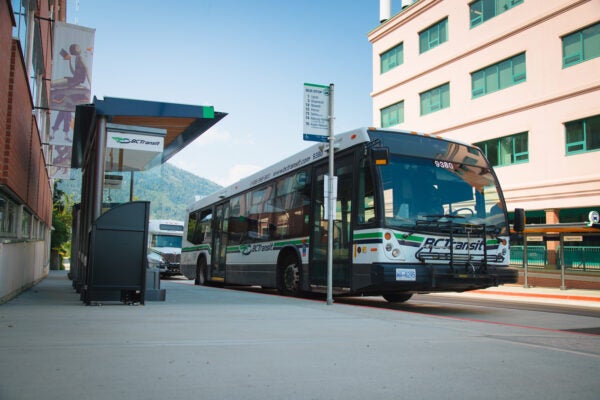
Safety and Design
Safety is one of BC Transit’s core values and is an important consideration for bus stops. Each location is planned to support safe access for riders and meet the needs of our transit vehicles. We work closely with local government partners when stops are built or upgraded to make sure they’re safe, comfortable, and easy to use.
A well-designed bus stop may include:
- Barrier-free access to sidewalks, crosswalks, and pathways with curb ramps
- A safe waiting area with good lighting
- A clear landing pad for boarding and exiting the bus
- Shelter and seating
- Placement after a crosswalk or intersection for better visibility
- Clear sightlines for drivers and riders crossing the road
- A visible bus stop sign pole
- A red curb marking to show it’s a no-stopping zone
Some stops include a shelter or bench, while others have only a signpost. Each stop is designed to fit its surroundings and meet local needs.
Roles and Responsibilities
BC Transit works with local governments to shape the transit experience in your community.
Local governments are responsible for:
- Installing bus stop infrastructure
- Owning and maintaining shelters, benches, pads, lighting, and related features
BC Transit provides:
- Design guidelines and technical support
- Programs, such as the Bus Shelter Program, that help communities build safe, accessible stops
- Expertise that supports consistent, provincial-standard infrastructure
This partnership helps ensure stops are built to meet accessibility standards and support community growth.
What You’ll Find on a Bus Stop Sign
Each BC Transit bus stop sign includes:
- BC Transit website and contact information
- A stop ID number
Many bus stop signs may also include:
- Route name and number
- Frequency indicator (Rapid, Limited Stops, Frequent, or Local)
- Accessibility symbol, when applicable
Accessibility
Accessibility is a priority across our system. Stops marked with a wheelchair symbol are designated as accessible and support safe boarding for all riders, including those using mobility devices.
Bus Stop Design Guide
Local governments and developers can use BC Transit’s detailed design guide to plan and build safe, accessible stops that support transit vehicles and rider needs.
Bus stops and all streets that have transit service should be designed in alignment with our On-Street Infrastructure Design Guide.
Bus Shelter Program
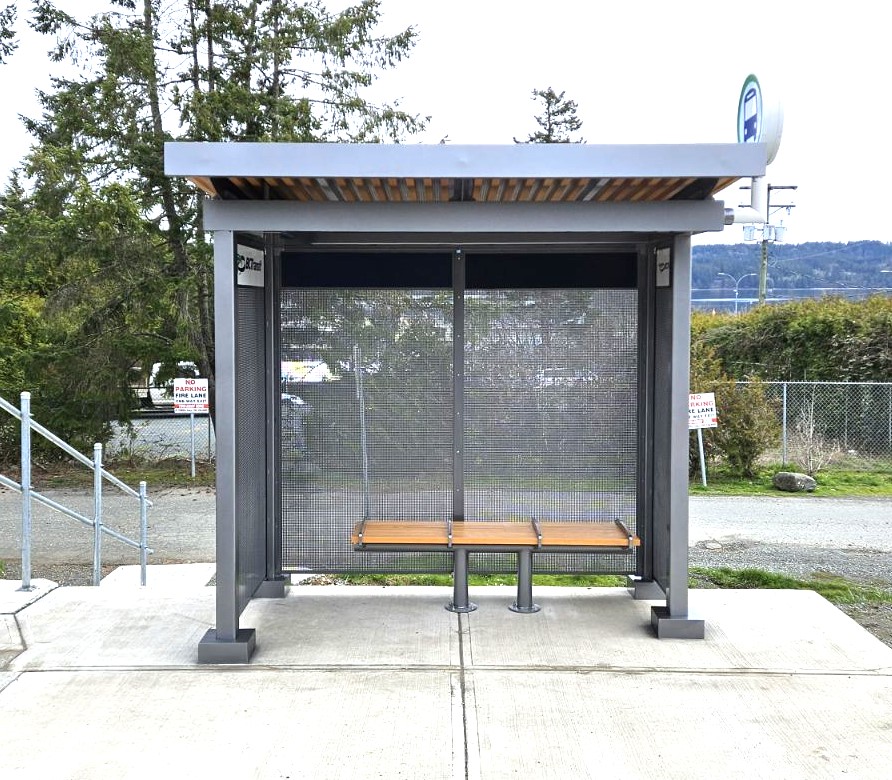
Bus shelters are an important part of the rider experience. They make waiting for the bus safer, more comfortable, and more accessible, especially in bad weather. The Bus Shelter Program helps municipalities upgrade and install new shelters that share a consistent look, feel, and function across communities.
Program Overview
BC Transit works with local governments to improve shelter infrastructure across British Columbia. Municipalities own and maintain most shelters, while BC Transit provides funding programs, technical support, and design standards to ensure shelters meet safety, accessibility, and durability goals.
Shelter Design
BC Transit’s shelters feature modern, modular designs that are durable, sustainable, and adaptable to different site needs. They are built to withstand vandalism and harsh weather while offering flexibility for future expansion.
Key features include:
- Modular components for various sizes and configurations
- Solar-powered lighting and energy-efficient LED options
- Durable materials that are easy to maintain and repair
The Bus Shelter Program Brochure has illustrations of all available shelter designs, ranging from minor stop upgrades to large transit exchanges.
Shelter Pricing and Purchase Options
Municipalities can choose from the following options to buy or install a BC Transit standard shelter design:
- Shared Provincial Funding (ICIP – Investing in Canada Infrastructure Program)
- Direct Purchase
Review the Bus Shelter Program Brochure for more details, including bus shelter pricing information. For pricing questions, email shelterpricing@bctransit.com.
Note: Shelter pricing excludes taxes, CPI (consumer price index) adjustments, and additional costs such as travel, ferry, or site survey expenses.
Shelter Installation
Municipalities are usually responsible for site preparation prior to shelter install, such as concrete pad and electrical work. Before installation:
- Review the Bus Shelter Engineering and Installation FAQ
- Complete the Site readiness checklist
Apply for the Shelter Program
Municipalities can apply for shelter funding by downloading and completing the Application Form (PDF) and emailing it to newshelterprogram@bctransit.com. The application intake typically opens in the fall and applications are due by mid-January.
Note: If you need assistance completing the form, please contact newshelterprogram@bctransit.com.
How to Submit Your Application
Download and complete the application form offline. Do not fill it out in your browser. Attach the completed form to your email submission. Include the following for each location in your application:
Concrete Pad Status
- If the pad is installed, include as-built drawings, foundation drawings, and site photos.
- If the pad is not installed, contact the shelter vendor for updated foundation drawings that meet the latest BC Building Code.
Site Readiness
Include a completed Site Readiness Checklist.
Additional Information
Use the notes section in the form to share project details or related links.
Payment Method
Choose either Direct Lump Sum or 10-Year Lease Fees (added to the Annual Operating Agreement).
Minor Betterments Program
Municipalities may also access additional funding for smaller infrastructure upgrades through the Ministry of Transportation and Transit’s Minor Betterments Program. You can find details on Ministry of Transportation and Transit links below:
- Transit Minor Betterments Funding Request Application or search forms on MOTT website
- Ministry of Transportation and Transit (MOTT)
Questions and Inquiries
If you have questions or feedback about a bus stop, we’re here to help. Email: busstops@bctransit.com