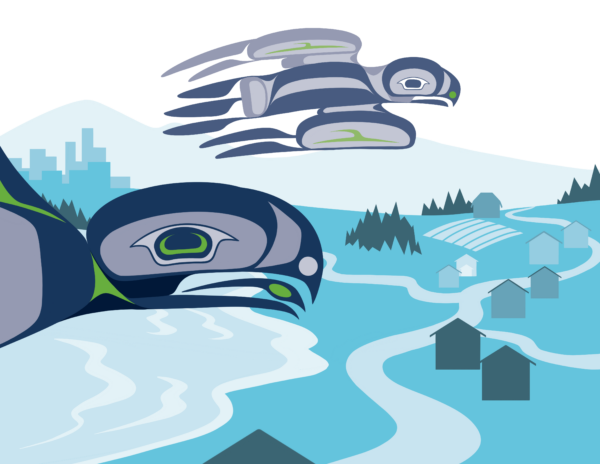
–All illustrations and graphics were created by Bayja Morgan-Banke from Toquaht, Nuu-chah-nulth Nation, and Bonaparte Nation.
Our Reconciliation Vision
At BC Transit, our journey toward reconciliation begins with a spirit of humility and a commitment to truly listen, learn, and grow together. We understand that reconciliation is not a task to be completed, but a way of being. It is an ongoing process that asks each of us to examine where we are and where we must go. This journey calls for our full attention, open hearts, and willingness to listen, learn, and change.
Our vision of reconciliation embraces the understanding that public transportation is more than a service. It is a bridge to connection, opportunity, and self determination. We acknowledge the harms of colonialism and the barriers it has created, and we aim to support mobility equity so that public transportation becomes a path toward healing, belonging, and community for all.

At BC Transit, we recognize that reconciliation is not a single act, but a continuous journey of learning, listening, and acting in good faith.
Evolving Reconciliation Framework
In pursuit of this vision, BC Transit has developed our Evolving Reconciliation Framework, which holds our five guiding pillars that capture the varying areas where the organization can make meaningful impact toward reconciliation. This framework continues to evolve and is intended to remain iterative, reflective, ongoing, and responsive to the feedback, guidance, and suggestions shared by Indigenous communities and organizations.
In pursuit of this vision, BC Transit’s reconciliation journey is rooted in the following guiding pillars:

Building Relationships
Developing meaningful, trust-based relationships with Indigenous communities, organizations, and employees through authenticity, respect, and transparency.

Advancing Employment and Education
Create new opportunities for learning and growth through partnerships with Indigenous organizations and communities.

Inclusive Governance
Identifying and removing systemic barriers to Indigenous participation in transportation decision-making, ensuring governance processes reflect the unique needs and priorities of Indigenous Peoples.

Sustainable Funding
Recognizing funding gaps and exploring innovative solutions to meet the needs of Indigenous People and communities so that transit funding models support mobility and access for all.

Enhancing Access
Collaborating with Indigenous communities and organizations to increase access to safe, reliable public transportation, recognizing its critical role in enabling access to healthcare, employment, education, and other vital services.
Our Path Forward: Annual Reconciliation Action Plans
To ensure this work is grounded in meaningful action and creates lasting organizational change, annual Indigenous Reconciliation Action Plans will be developed. This approach was established through the Indigenous Relations Steering Committee, and supported by the Indigenous Relations Working Group, to help ensure reconciliation remains a shared organizational responsibility, with actions and accountability held across all divisions rather than sitting within one area alone. Together with Indigenous Peoples, BC Transit will write a new chapter for public transportation where reconciliation, mobility equity, and shared prosperity guide our collective path forward.
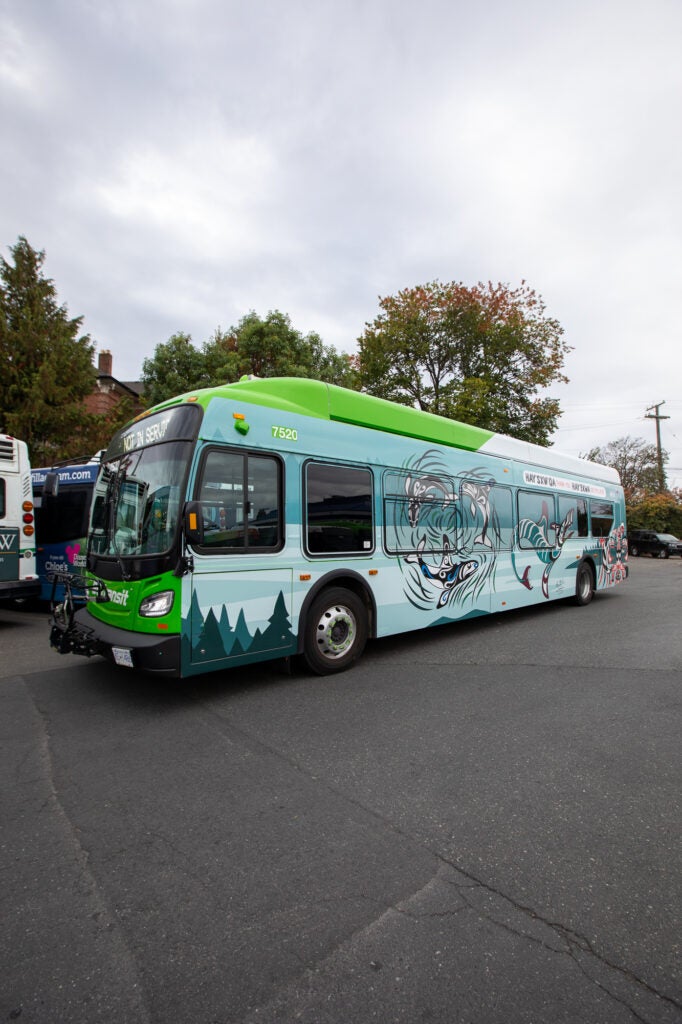
A journey of understanding: the story behind the Indigenous bus design
BC Transit is honoured to partner with Elder Butch to wrap a Victoria Regional Transit System bus with a moving expression of culture, identity, resilience, and community connection. Through storytelling and powerful imagery, it invites riders and community members to learn, reflect, and build understanding.