A journey of understanding: the story behind the Indigenous bus design
The Vision
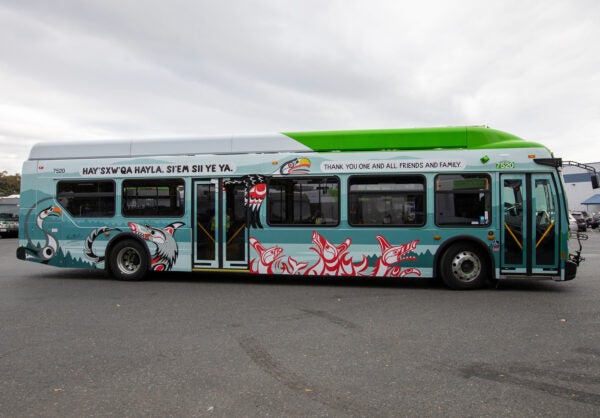
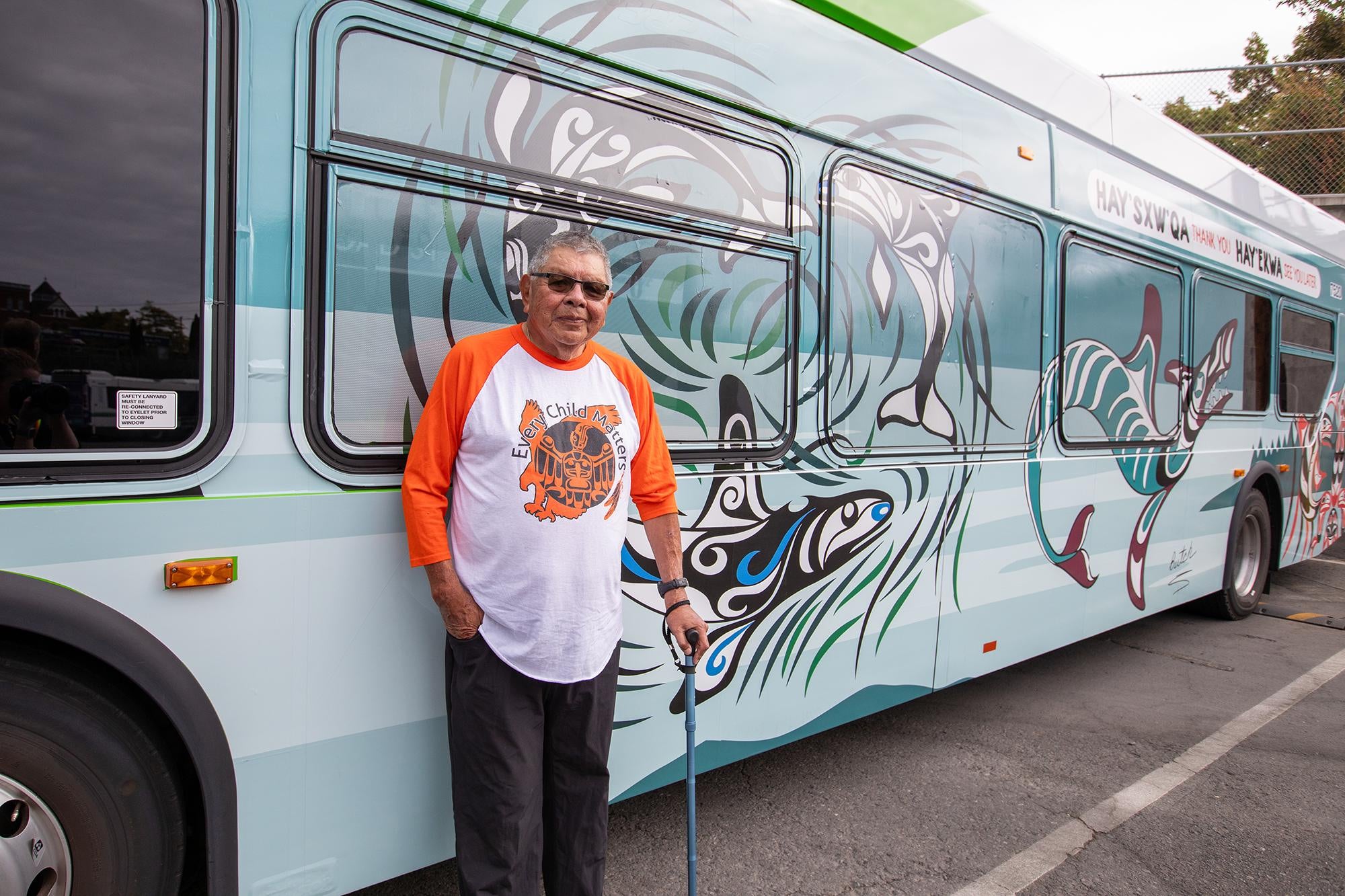
The Indigenous bus design is a moving expression of culture, identity, resilience, and community connection. Through storytelling and powerful imagery, it invites riders and community members to learn, reflect, and build understanding. As Elder Butch shared, art can be “a conduit to understanding,” creating opportunities for people from all backgrounds to connect through shared human experiences.
For Elder Butch, art is both a gift and a responsibility:
“To carry a gift as an artist is a gift from the Creator. This is a gift that requires constant nourishment. A gift is not a gift unless it is shared.”
And this spirit of sharing is at the heart of the project. BC Transit is honoured to partner with Elder Butch to share the stories, teachings, and artistic traditions of the Lək̓ʷəŋən Peoples into the everyday journeys of the communities we serve.
The project is especially meaningful because of Elder Butch’s lifelong connection to transit. As a child, he travelled by bus with his mother to the waterfront, where they harvested clams, oysters, and other foods from the shoreline before carrying their bucket home on the bus. Over the years, transit continued to be part of his journey, taking him to grade school, college, and art school, while bus drivers became familiar and trusted faces along the way. These experiences shaped his connection to community and place. With this bus design, his artwork now travels many of those same routes, carrying stories, culture, and understanding to a new generation of riders.
The focus is on the sustainability and resilience of our people. We’re still here, our culture is still here, and our language is still here.
– Elder Butch Dick
About the artist
Clarence “Butchˮ Dick (Yuxʼweyʼlupton)
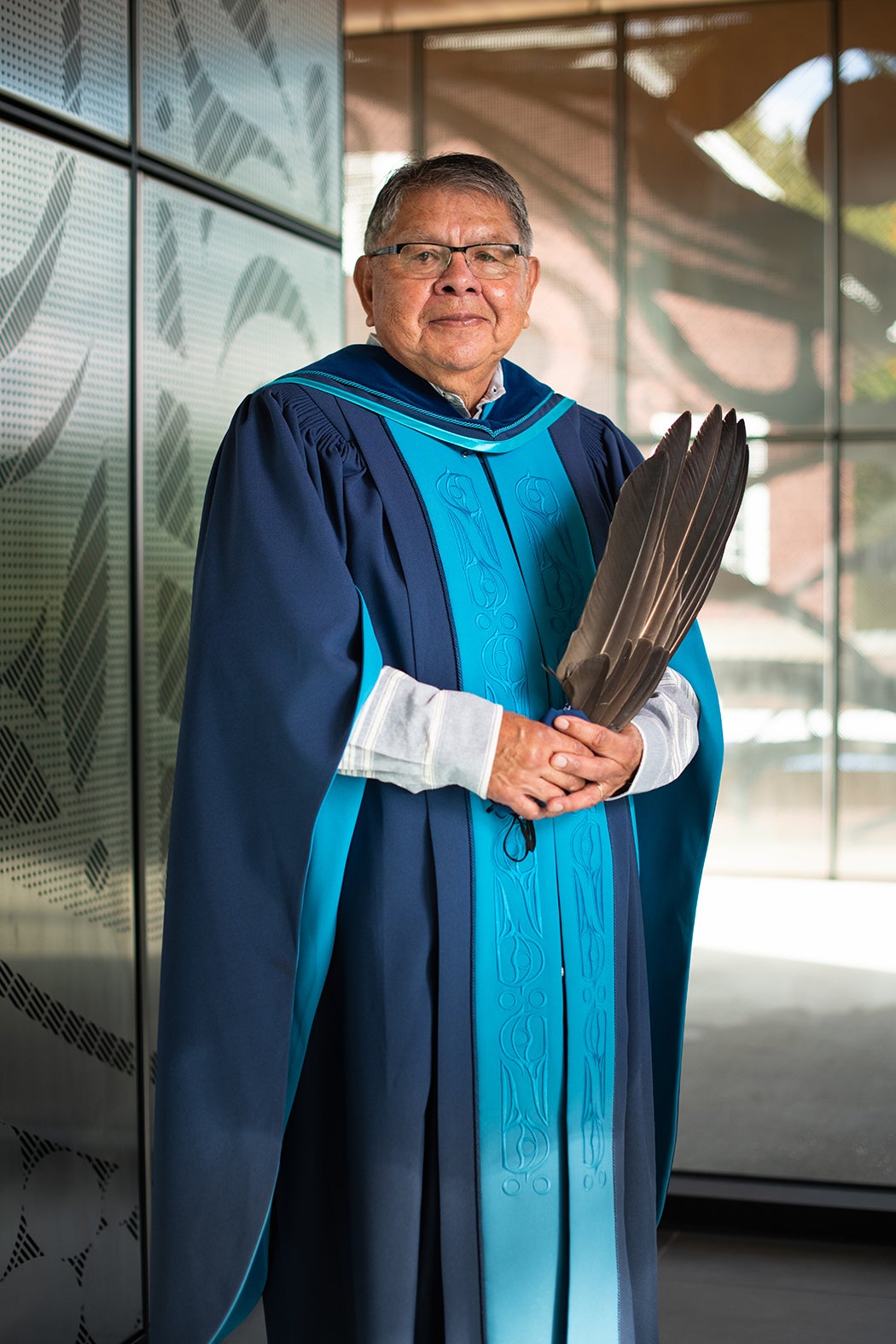
Songhees First Nation Elder Butch Dick is an internationally renowned carver, artist, educator, and knowledge sharer whose life’s work has built connections between people, cultures, and communities.
With a background in fine art and graphic design, Elder Butch has spent decades sharing Indigenous art, culture, and teachings through education, curriculum development, and language revitalization. A passionate educator, he taught Indigenous art in Greater Victoria-area schools for 25 years, inspiring generations of young people to explore creativity, culture, and identity.
Throughout his life, Elder Butch has used art and storytelling to foster understanding and build bridges between Indigenous and non-Indigenous peoples. In recognition of his outstanding contributions to community and culture, he was awarded the Leadership Victoria’s Lifetime Achievement Award.
In 2021, Royal Roads University awarded Elder Butch an Honorary Doctorate of Laws, recognizing him as a “true visionary guide” and celebrating his lasting impact as an artist, educator, and cultural leader.
Beyond his accomplishments, Elder Butch is a devoted husband, father, grandfather of 31, and great-grandfather whose legacy continues to be carried forward through the people and communities he has touched.
Honouring culture, teachings, and ancestors
At its heart, the artwork celebrates the strength, resilience, and living traditions of Indigenous Peoples.
“First Nation art represents stories that we were told; they represent a rich, vibrant spirit of a Nation.”
The wrap honours the Elders, ancestors, and generations who have sustained cultural teachings, language, and traditions, while sharing those stories with the broader community.
As Elder Butch reflected:
“The focus is on the sustainability and resilience of our people. We’re still here, our culture is still here, and our language is still here.”
The stories within the design
The artwork draws on traditional Lək̓ʷəŋən stories connected to the lands and waters of this region. At the heart of the design is a traditional Lək̓ʷəŋən origin story:
“Lekwungen Peoples are all wolf people, and most Coast Salish people are wolf people. Our origin story is that there was a pod of whales swimming in a circle in a bay, and as they broke for shore they transformed into sea wolves. And once they hit the shore they turned into wolves of all different colours and then established villages along the coast.ˮ
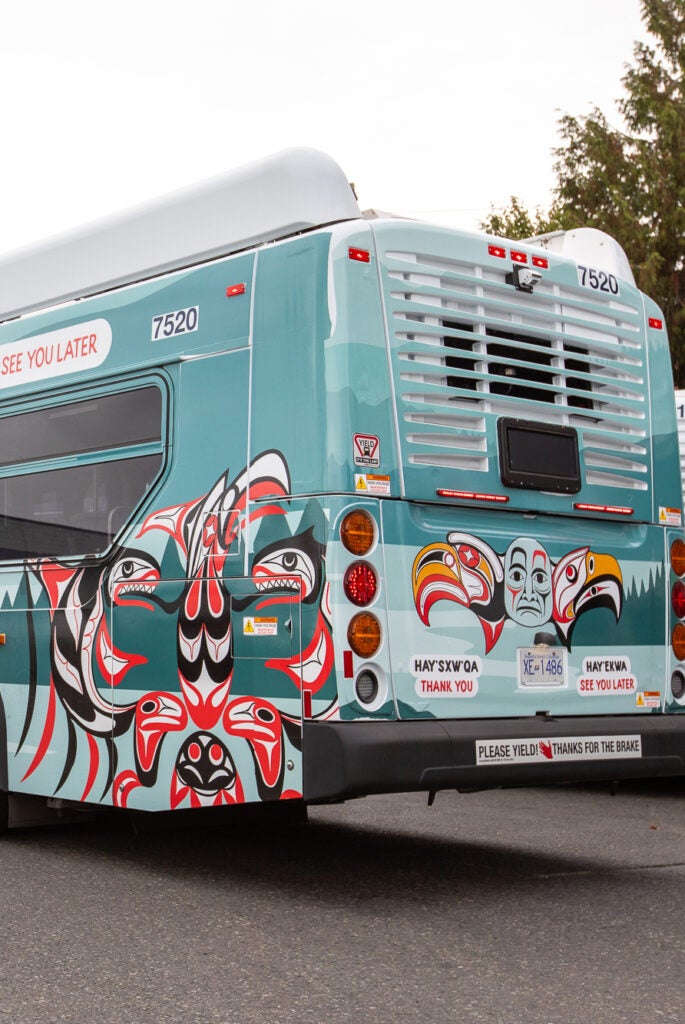
The design also incorporates other spirit animals, including eagles, a great blue heron and transformation imagery inspired by traditional teachings that speak to growth, change, and understanding. A prominent transformation mask, Kel’s Stillsuit Mask, (located at the back of the bus) represents the possibility of seeing the world differently and embracing new perspectives.
These symbols reinforce an important message: understanding is a journey. By learning from one another and remaining open to different experiences and worldviews, people can build stronger relationships and communities. As Elder Butch expresses through both his art and teaching, the goal is not simply to share information, but to foster genuine understanding.
“The use of symbolism to convey a sincere message is to ask for a simple word: understanding.”
“We are all different, but the same.”
Colour, movement, and language
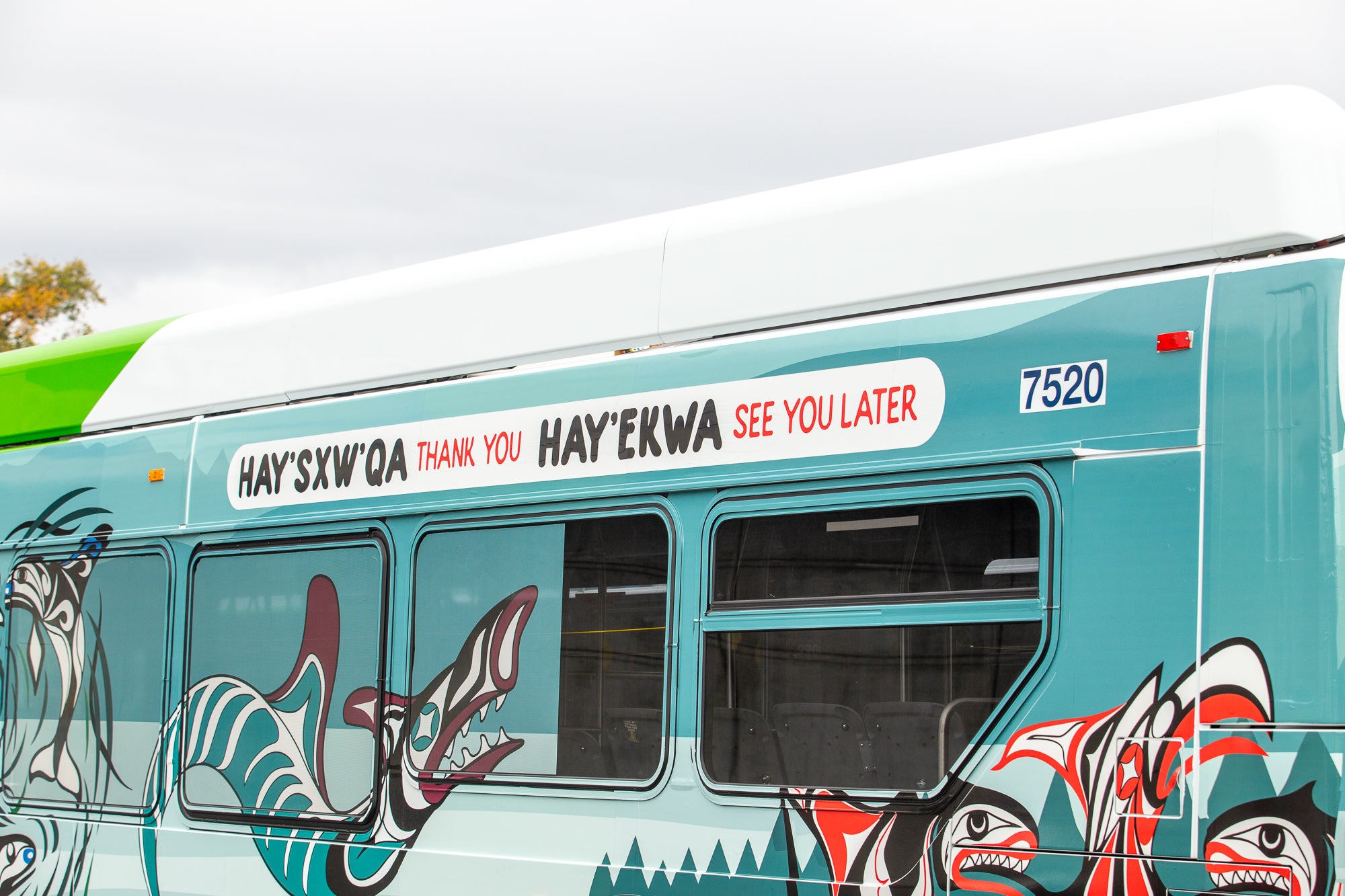
Inspired by the four colours of the Medicine Wheel, the artwork incorporates white, black, yellow, and red to create a bold and dynamic design. Flowing lines and strong forms convey movement, reflecting both the physical journey of transit and the ongoing journey of learning and understanding.
The inclusion of Indigenous language is equally important. More than words, language carries culture, history, and identity. Its presence within the artwork helps ensure that Indigenous voices and teachings remain visible, celebrated, and shared.
A Message for Everyone
Throughout conversations about the project, Elder Butch repeatedly returned to themes of acceptance, inclusion, and shared humanity.
“Acceptance and inclusion create understanding.”
“It is said that we are all one and we share, nurture and care for the earth.”
“The voice may be brought forth by First Nation People but is a message to all.”
While rooted in Indigenous teachings, the message of the design is universal. It invites all of us to reflect on respect, empathy, and our shared responsibility to care for one another and the communities we call home.